
Quaternary Ammonium Products can present different freight requirements depending on their composition, concentration, physical form and assessed hazards. A purchasing description such as “quat catalyst” is therefore insufficient for booking cargo. Buyers need transport information that matches the actual supplied material, together with a clear record of who reviewed that information for the intended route. This guide explains how to organize that review before requesting a freight quotation or releasing a purchase order.
Quaternary Ammonium Products and UN Numbers
A UN number is a four-digit transport identifier. Some entries describe individual substances, while others cover groups of materials with similar hazards. The number belongs with a proper shipping name, hazard class and, where applicable, packing group. The New Zealand EPA explanation of UN numbers provides an accessible introduction to these distinctions and the international framework. Its national requirements apply in New Zealand; buyers elsewhere must establish the rules applicable to their own shipment.
A CAS number serves a different purpose: it identifies a chemical substance. It does not establish the freight classification of every commercial preparation containing that substance. A dry salt and a solvent-containing formulation cannot be assumed to have identical transport descriptions. Similarly, a customs tariff code serves a customs classification purpose and should not replace dangerous goods information in a carrier booking.
For procurement teams, the useful question is not simply which number belongs to a product name. Ask which transport description applies to the exact grade, package and shipping mode being quoted. Treat any unresolved difference between the purchase specification and transport paperwork as an open item before dispatch.
Start with the Actual Supplied Grade
Consider tetrabutylammonium bromide (TBAB), CAS 1643-19-2. This salt may be evaluated as a phase transfer catalyst in synthesis development. Its identity provides a useful starting point for matching the quotation, certificate of analysis and safety data sheet. However, the identity alone is not a shipment-specific transport determination. Ask for documentation covering the offered grade rather than borrowing a transport entry from an unrelated catalog listing.
When comparing TBAB offers, record the product code, declared physical form, composition information and document revision date. If a supplier offers the chemical as a preparation instead of the specified solid, ask for a fresh review of the transport information. A change in the supplied preparation should also trigger a check of whether the quotation still meets the intended process requirements.
The same purchasing discipline is useful across catalysis and synthesis chemicals. Keep technical qualification and freight qualification connected: the sample approved by the laboratory, the grade on the purchase order and the material described to the forwarder should be traceable to the same specification. This is especially helpful when several departments use different abbreviations for a product.
Review the SDS and Resolve Document Gaps
Use the transport section of the current safety data sheet as the starting document for the booking review. Record the stated UN number, proper shipping name, class, packing group where assigned, environmental transport information and relevant precautions. Where separate entries are provided for different transport modes, retain those distinctions. The SDS should describe the material being supplied, including its relevant composition and physical form.
Send unclear or inconsistent entries back to the supplier for explanation. An empty field should not be interpreted as confirmation that the material is unrestricted for transport. If the SDS states that the product is not regulated for a particular mode, ask the responsible reviewer to confirm that this statement covers the planned shipment. Buyers should not create their own replacement classification from a similar product’s paperwork.
Maintain a short review record with the following information:
- The supplier product code and specification revision used for the order.
- The SDS issue date and the transport mode covered by the review.
- Any questions raised about composition, naming or document consistency.
- The written resolution and the person responsible for confirming readiness.
This record makes later changes easier to assess. If the packing arrangement or formulation changes after a freight quote is issued, return the changed information to the reviewer before treating the original quote as final.
Prepare the Freight Enquiry for Gulf Destinations
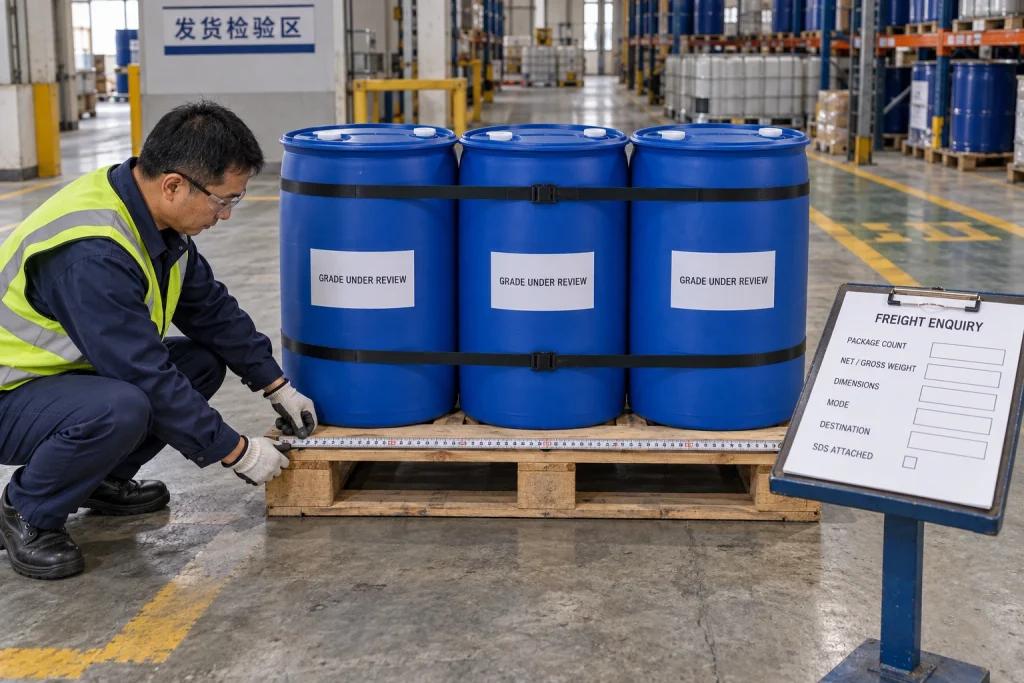
For deliveries to Jebel Ali or another Gulf destination, prepare one consistent enquiry containing the product description, SDS, package count, net and gross weights, package dimensions, proposed transport mode and destination. Identify any onward delivery leg so that the forwarder can assess the complete route. Ask which supporting documents and booking details are required for that specific movement before committing to a dispatch date.
Packaging marks, hazard labels and transport documentation have distinct functions. The UK HSE guidance on consignment procedures illustrates these distinctions within the ADR road transport framework. It should not be treated as a substitute for the requirements applicable to a Gulf shipment. Have the responsible transport specialist confirm the relevant packaging, marking, documentation and carrier conditions for the chosen route.
Compare freight offers on the same basis. Ask whether the quotation includes the services needed for the documented cargo and whether any acceptance conditions remain outstanding. Our discussion of shipping hazardous chemicals to UAE and Gulf ports offers related purchasing context. Keep the final booking record alongside the approved order documents so that warehouse and logistics teams work from the same information.
Why AXIA CHEM
AXIA CHEM welcomes enquiries that bring product specification, quality documentation and delivery requirements together. Share the intended application, requested quantity, destination and preferred packing when discussing supply. Ask our team to confirm available documentation, specification details and proposed timing in writing. Clear requirements support a focused response and help identify questions that need resolution before an order proceeds.
For your next sourcing review, contact AXIA CHEM about quat supply and shipment documentation. Include the exact grade under evaluation so that commercial and technical discussions remain aligned with the material you intend to purchase.
Regulatory disclaimer: These products are supplied for research, formulation development, industrial and non-regulated applications. Final suitability for pharmaceutical, oral care, cosmetic, food-contact or biocidal applications shall be verified by the buyer according to local regulations. AXIA CHEM does not claim that any product is FDA approved, USP/EP certified, GMP grade or approved for any specific regulated end use unless otherwise confirmed in writing with supporting documentation.