
For procurement teams across the Gulf, shipping chemicals to UAE ports such as Jebel Ali is a routine part of the sourcing cycle, yet it remains one of the areas where shipments most often run into avoidable delays. Hazardous cargo adds a layer of classification, documentation and packaging requirements on top of an ordinary sea freight booking, and the consequences of getting a detail wrong range from a rolled booking to cargo held at the port of discharge. This guide walks through the practical points that buyers in the UAE, Saudi Arabia and the wider GCC should review with their Chinese supplier before a hazardous consignment leaves the factory.
How Dangerous Goods Classification Shapes the Shipment
Sea transport of hazardous chemicals is governed by the IMDG Code, which assigns each regulated substance a UN number, a hazard class and, where applicable, a packing group. These details come from the product’s Safety Data Sheet, and they determine almost everything else about the shipment: what packaging is acceptable, how the cargo is labeled, whether the shipping line requires advance dangerous goods approval, and what surcharges apply.
Many products in the quaternary ammonium salts family fall into this territory. Cationic surfactants such as hexadecyltrimethylammonium bromide (CTAB), for example, are commonly handled as environmentally hazardous or corrosive cargo depending on the specific classification stated on the supplier’s SDS. Other items in the same chemical family may ship as non-regulated general cargo. The point for buyers is not to memorize hazard classes but to confirm, before the order is placed, exactly how the supplier classifies the product and whether that classification is reflected consistently across the SDS, the packaging marks and the shipping documents. Inconsistencies between these documents are a frequent trigger for customs queries in Gulf ports.
It is also worth asking early whether a dangerous goods booking is even necessary. Some products are regulated only above certain concentrations or package sizes, and a supplier with real export experience can explain the basis for the classification rather than defaulting to the most conservative option, which inflates freight cost, or the most convenient one, which creates compliance risk.
Documentation Buyers Should Expect from the Supplier
A hazardous shipment from China to the Gulf normally travels with a document set that goes beyond the standard commercial invoice and packing list. Buyers should expect to receive, and should review in draft before shipment:
- A GHS-format Safety Data Sheet, current and consistent with the product actually supplied.
- A dangerous goods declaration prepared for the shipping line, showing the UN number, proper shipping name, class and packing group.
- A Certificate of Analysis for the specific batch shipped, matching the batch numbers marked on the drums or bags.
- The bill of lading, certificate of origin and any legalized documents required by the destination country.
For regulated cargo, shipping lines generally require dangerous goods approval before the booking is confirmed, and cut-off times for DG cargo at Chinese ports are earlier than for general cargo. Buyers planning around a production schedule in the UAE or Saudi Arabia should build this into the timeline rather than assuming the quoted transit time is the whole story. Sea transit from main Chinese ports to Jebel Ali is commonly quoted in the range of three to four weeks, but document preparation, DG approval and port cut-offs can add meaningful time in front of that.
On the import side, requirements vary by emirate and by product category. Certain chemical categories may need importer registration or prior approval from the relevant UAE authorities before clearance, so it is prudent for the importer of record to verify local requirements for the specific HS code in advance. A supplier cannot substitute for this local step, but a responsive supplier can turn around corrected or additional documents quickly when the clearing agent asks for them.
Packaging, Marking and Container Practice
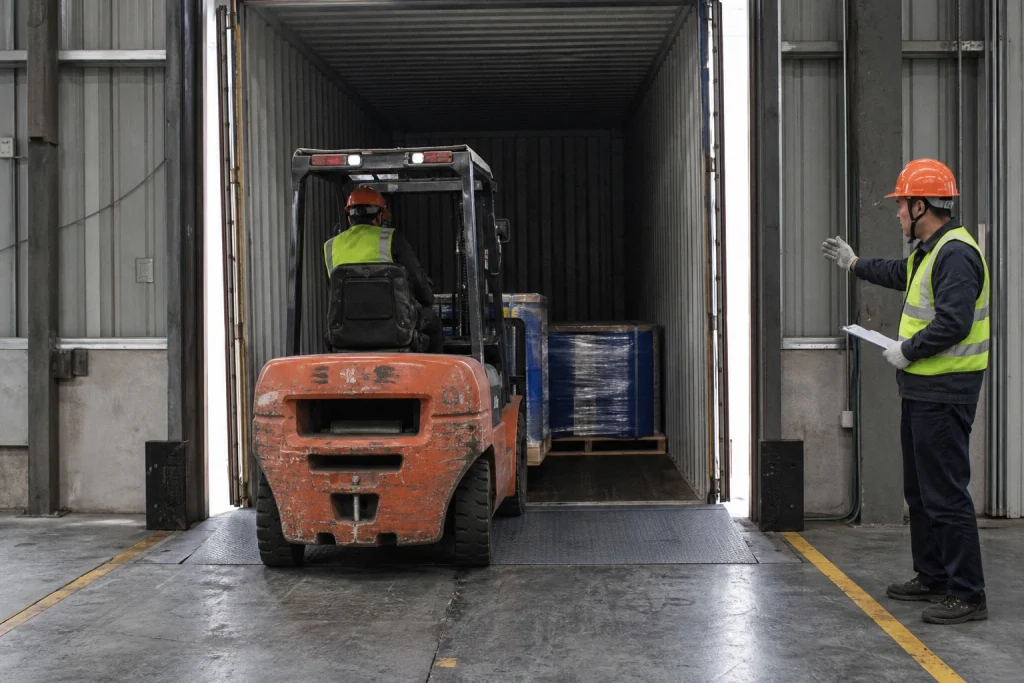
Hazardous chemicals must travel in UN-certified packaging appropriate to their packing group, with the UN specification mark visible on each package. In practice, for solid quats and related specialty fine chemicals, this often means UN-rated fiber drums or bags with inner liners, stacked on pallets that meet ISPM 15 fumigation standards for export.
Beyond certification, buyers moving product into Gulf climates should pay attention to practical packing quality. Containers routed through the region experience high temperatures and humidity, so desiccants, sealed liners and sensible container stuffing matter for hygroscopic products. Labels should be securely applied and match the documentation exactly, including batch number and net weight, because port inspections in the region frequently check physical marks against the manifest.
Routing Into Jebel Ali and Other Gulf Ports
Jebel Ali remains the region’s principal container hub and the natural first port of call for UAE-bound cargo, with dense direct services from the main Chinese export ports. Buyers elsewhere in the GCC typically route either directly to national ports such as Dammam, Jeddah, Hamad or Sohar, or via transshipment through Jebel Ali. Direct services reduce handling of hazardous cargo, which is generally preferable, but transshipment can be considered where direct DG acceptance is limited on a given service.
Whichever routing applies, the working rule is the same: confirm DG acceptance for the specific UN number on the specific service before committing to a production and delivery schedule. Carriers maintain their own restricted lists, and acceptance can differ between services calling at the same port.
Why AXIA CHEM
AXIA CHEM supplies quaternary ammonium salts, phase transfer catalysts and specialty fine chemicals from China to industrial buyers across the Middle East and beyond. Our team prepares complete, consistent export document sets, uses UN-certified export packaging where classification requires it, and responds quickly when clearing agents in the region request clarifications or additional paperwork. Batch-specific Certificates of Analysis accompany every shipment, and we are used to the practical realities of routing hazardous and non-hazardous cargo into Jebel Ali and other Gulf ports. If you are planning a shipment and want a supplier who treats logistics as part of the product, contact us to discuss your requirement.
Regulatory disclaimer: These products are supplied for research, formulation development, industrial and non-regulated applications. Final suitability for pharmaceutical, oral care, cosmetic, food-contact or biocidal applications shall be verified by the buyer according to local regulations. AXIA CHEM does not claim that any product is FDA approved, USP/EP certified, GMP grade or approved for any specific regulated end use unless otherwise confirmed in writing with supporting documentation.