
Formulators who work with shampoos, conditioners, skin cleansers and oral care products rely heavily on quats in personal care chemistry. Quaternary ammonium compounds, usually shortened to quats, are cationic molecules built around a positively charged nitrogen atom carrying four organic substituents. That permanent positive charge is what makes them so useful: it lets them bind to negatively charged surfaces such as damaged hair fibers and skin, deliver conditioning and antistatic effects, and in some structures provide antimicrobial performance. For sourcing managers and R&D teams, understanding which quat does what is the first step toward specifying the right grade and negotiating with the right supplier.
Why the Cationic Charge Matters in Personal Care
Hair and skin surfaces tend to carry a net negative charge, and hair that has been bleached, colored or heat-styled is even more anionic because chemical damage exposes acidic groups on the keratin surface. A cationic quat is naturally attracted to these sites. Once deposited, the molecule orients its fatty alkyl chain outward, creating a thin lubricating layer that reduces combing friction, tames static flyaway and improves the feel of the hair.
This substantive deposition is the core mechanism behind rinse-off conditioners: even after water washes most of the formula away, a monolayer of quat remains bonded to the fiber. The same principle can be considered for skin-feel modifiers in creams and lotions, where small amounts of cationic material may be evaluated to improve after-feel without heaviness.
The Main Quat Families Used in Formulations
Personal care quats fall into a few structural families, each with a distinct role.
Alkyltrimethylammonium salts. These are the workhorse conditioning agents. Dodecyltrimethylammonium chloride (DTAC), CAS 112-00-5, carries a C12 chain and is commonly explored where lighter conditioning and good water solubility are needed, for example in clear formulations. Longer-chain homologs such as hexadecyltrimethylammonium bromide (CTAB), CAS 57-09-0, with a C16 chain, deposit more substantively and give a richer, more cushioned feel, which is why C16 and longer quats dominate conditioner bases. As chain length grows, water solubility drops and the material behaves more like a structuring agent that builds lamellar gel networks together with fatty alcohols.
Pyridinium quats. Cetylpyridinium chloride (CPC), CAS 6004-24-6 for the monohydrate, is best known in oral care, where it may be evaluated as a cationic antimicrobial in mouthwashes and throat preparations. Its aromatic pyridinium head differentiates it from the trimethylammonium family both in performance and in regulatory treatment.
Benzyl-substituted quats. Benzalkonium chloride and related structures combine surface activity with antimicrobial character and are commonly explored in preservation and sanitizing roles, subject to strict regional concentration limits.
Esterquats and polyquaterniums. Modern conditioner and fabric-softener chemistry increasingly uses esterquats for better biodegradability, while polymeric quats (the polyquaternium INCI series) provide film-forming and conditioning-from-shampoo effects. These are typically specified separately from monomeric quats and often sourced from dedicated polymer producers.
Function by Product Category
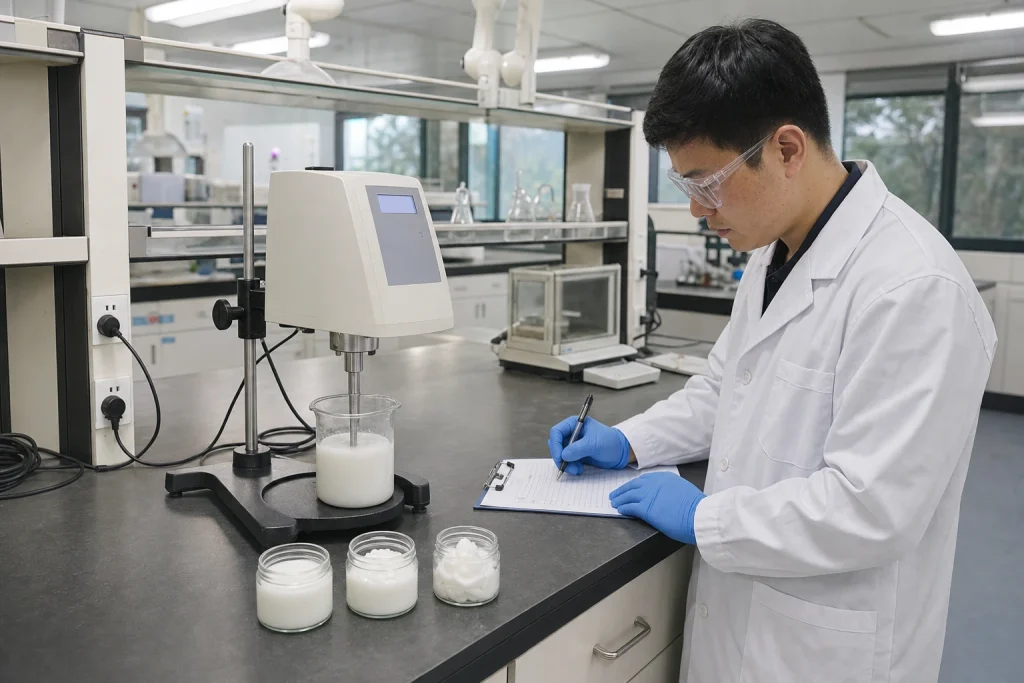
In hair conditioners, a typical base combines a C16-C22 quat with cetyl or stearyl alcohol to form a lamellar gel network. The quat supplies charge and deposition; the fatty alcohol supplies body and viscosity. Formulators adjust the quat-to-fatty-alcohol ratio to move between light daily-use rinses and intensive masks.
Shampoos are anionic systems, so monomeric quats are usually incompatible at meaningful levels. Here polyquaterniums or amphoteric boosters carry the conditioning role, though small amounts of selected quats may be evaluated in specialty low-anionic systems.
In skin cleansing and sanitizing products, antimicrobial quats such as benzalkonium chloride can be considered where regulations permit, always at defined use levels. In oral care, CPC-based rinses are a long-established category. Across all of these applications, final suitability for any regulated end use has to be confirmed by the formulator against local rules, since quat classifications differ between the EU, the US, the GCC and Asian markets.
Specification Points Buyers Should Check
Quats intended for personal care carry tighter expectations than technical grades, and a careful review of the certificate of analysis pays off. Points worth checking include:
- Active content and identity. Confirm the assay method (usually two-phase titration) and whether the figure refers to the quat itself or total cationics.
- Free amine and amine hydrochloride. Residual tertiary amine from quaternization affects odor and skin compatibility; lower is better for leave-on products.
- Chain-length distribution. A C16 material with a broad homolog spread will not perform like a high-purity cut, especially in gel-network conditioners.
- Color, odor and clarity. Personal care buyers typically require low-color solutions or white to off-white solids with faint odor.
- Solvent system. Liquid quats are often supplied in water, isopropanol or glycol carriers; the carrier must fit the target formulation and regional labeling requirements.
Consistent lot-to-lot quality matters as much as the headline assay. A supplier who can share batch history and respond quickly to specification questions reduces reformulation risk on the buyer’s side. Our range of quaternary ammonium salts covers the common alkyltrimethyl and pyridinium structures used in these applications, alongside related specialty fine chemicals for cosmetic and formulation projects.
Formulation and Handling Notes
Quats are generally stable molecules, but a few practical rules keep projects on track. Avoid combining monomeric quats with high levels of anionic surfactants, which precipitate as insoluble complexes. Watch pH extremes: strongly alkaline conditions can degrade ester-containing quats. Store solid quats in sealed containers away from moisture, since many grades are hygroscopic. During compounding, add quats to the water phase with gentle heat where needed, and confirm full dissolution before combining phases to avoid grainy textures in the finished emulsion.
Why AXIA CHEM
AXIA CHEM supplies quaternary ammonium compounds and related fine chemicals to formulators and distributors across the Middle East and worldwide. We maintain stable production capacity for standard and custom quat grades, apply batch-by-batch quality control with full documentation, and respond to technical and commercial inquiries quickly, typically within one business day. Whether you need a sample for evaluation or a recurring commercial volume with consistent specifications, our team can support your project from first inquiry to delivered goods. Contact us to discuss your requirements or request a quotation.
Regulatory disclaimer: These products are supplied for research, formulation development, industrial and non-regulated applications. Final suitability for pharmaceutical, oral care, cosmetic, food-contact or biocidal applications shall be verified by the buyer according to local regulations. AXIA CHEM does not claim that any product is FDA approved, USP/EP certified, GMP grade or approved for any specific regulated end use unless otherwise confirmed in writing with supporting documentation.