
Buyers sourcing specialty chemicals for the Gulf market quickly discover that GCC chemical import regulations involve more than a commercial invoice and a packing list. Between the region-wide technical standards issued by the Gulf Standardization Organization (GSO) and the national requirements enforced by bodies such as the Saudi Standards, Metrology and Quality Organization (SASO), a shipment that is fully compliant in one port may face questions in another. For procurement teams importing quaternary ammonium salts, phase transfer catalysts and other fine chemicals from overseas suppliers, understanding how these layers of regulation interact can be the difference between smooth clearance and costly delays at the port.
The GCC Regulatory Landscape: GSO and National Authorities
The Gulf Standardization Organization develops unified standards and technical regulations that member states of the Gulf Cooperation Council can adopt. In practice, GSO standards serve as a common technical reference across the region, covering areas such as labeling, packaging and safety information for many categories of goods.
However, adoption and enforcement remain national matters. Each member state maintains its own standards body and customs authority, and these national institutions decide how GSO standards are applied at the border. Saudi Arabia works through SASO, the United Arab Emirates through its national standardization framework, and other member states through their respective authorities. An importer should therefore treat GSO standards as the regional baseline while confirming the specific national rules of the destination market before the goods ship.
For chemicals in particular, the picture can involve more than one authority in the same country. Depending on the end use, a product may fall under the standards body, the customs authority, an environmental agency or a health-related regulator. Specialty chemicals intended for industrial synthesis are generally treated differently from substances destined for food, pharmaceutical or consumer applications, which is why the declared end use on shipping documents deserves careful attention.
SASO and Conformity Assessment for Saudi Arabia
Saudi Arabia is one of the largest chemical-importing markets in the region, and SASO plays a central role in defining which products require conformity assessment before entry. Importers into the Kingdom typically work through SABER, the online platform used to manage product registration and to obtain shipment-level certificates of conformity for regulated goods.
The practical implication for a chemical buyer is straightforward: before placing a purchase order, it is worth confirming whether the specific product and HS code are treated as regulated or non-regulated under the current SASO framework, and which certificates the importer of record must arrange in SABER. Requirements are updated over time, so relying on how a similar shipment was handled a year ago is not a safe assumption. A local customs broker or the appointed conformity assessment body can usually confirm the current status of a given HS code.
Suppliers can support this process, but they cannot replace it. The importer of record in Saudi Arabia holds the registration in the platform, while the overseas manufacturer contributes the technical documentation – specifications, safety data and product composition details – that the assessment may require.
Documentation That Moves Chemical Shipments Through GCC Ports
Whatever the destination market, a consistent documentation package is the foundation of smooth clearance. For specialty chemical shipments into the GCC, importers commonly prepare and review the following before departure:
- Safety Data Sheet (SDS): a current SDS aligned with GHS classification, describing hazards, handling and transport information for the specific product and grade.
- Certificate of Analysis (COA): batch-specific test results matching the agreed specification, with the batch number traceable to the labels on the drums or bags.
- Commercial invoice and packing list: with product names, CAS numbers where applicable, HS codes, net and gross weights, and country of origin stated consistently across all documents.
- Certificate of origin: issued or attested as required by the destination country, since several GCC states expect legalized origin documentation.
- Dangerous goods documentation: where the product is classified for transport, the DG declaration, UN number and packing group must match the SDS and the actual packaging used.
Inconsistencies between these documents are among the most common causes of customs queries. A CAS number on the invoice that differs from the SDS, or a product name on the COA that does not match the label, can trigger inspections that hold cargo at the port. Careful document alignment costs little and prevents a great deal.
Practical Steps Buyers Can Take Before Shipping
Experienced importers in the Gulf tend to follow a similar checklist when qualifying a new specialty chemical or a new supplier. Confirming the HS code classification early is a sensible first step, since duty rates and conformity requirements both follow from it. Requesting draft shipping documents for review before the goods leave the origin port allows errors to be corrected while correction is still cheap. Engaging a customs broker in the destination country who handles chemical cargo regularly is equally valuable, because brokers see how the rules are applied in practice, not only how they are written.
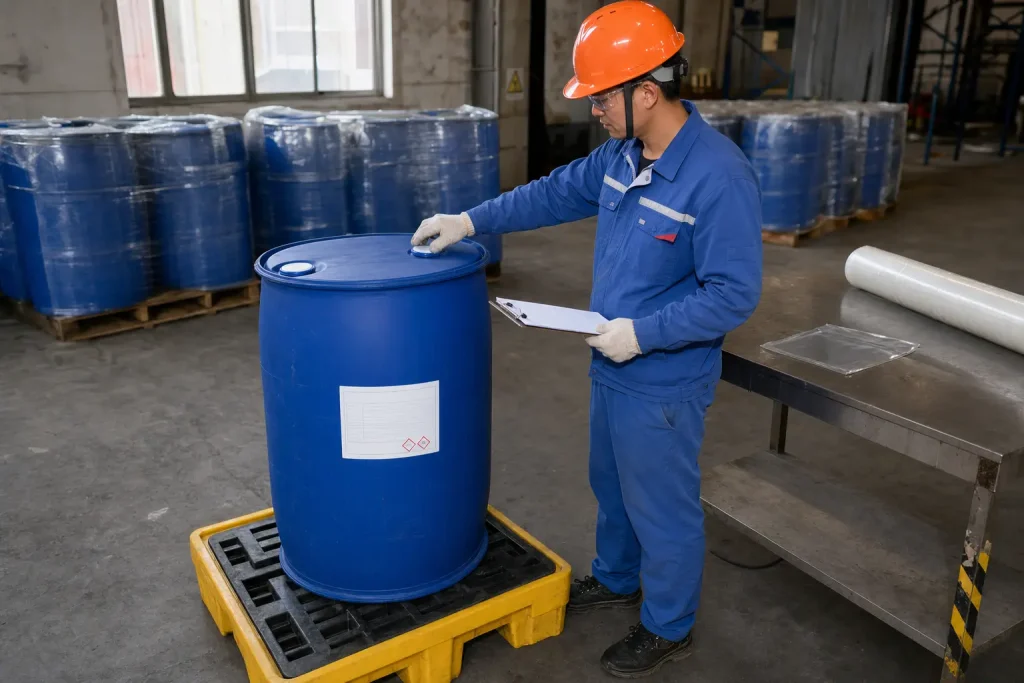
For products with hazard classifications, buyers may also wish to confirm that the packaging offered by the supplier – drum type, UN certification marks and pallet configuration – is acceptable to the shipping line and the receiving port. Sea freight of classified cargo into Gulf ports is routine, but it depends on correct declaration from the start; details of that process are discussed further across our resources on specialty fine chemicals supply.
How a Supplier Supports GCC Compliance
An overseas manufacturer cannot register products in national platforms on the importer’s behalf, but a well-organized supplier materially reduces the compliance burden. That support usually takes the form of complete and consistent documentation issued promptly: GHS-aligned SDS files, batch COAs, composition statements for conformity assessments, and shipping documents prepared to match the importer’s registration details. For frequently ordered items such as quaternary ammonium salts and phase transfer catalysts, keeping a standing documentation file for each product can shorten the lead time on every subsequent shipment.
Responsiveness matters as much as paperwork. When a customs authority raises a query, the speed at which the manufacturer can supply a clarification letter or an amended document often determines whether the cargo waits days or weeks.
Why AXIA CHEM
AXIA CHEM supplies quaternary ammonium salts, phase transfer catalysts, ionic liquid intermediates and specialty fine chemicals to industrial buyers across the Middle East and beyond. We prepare GHS-aligned SDS documentation, batch-specific COAs and consistent shipping documents for every order, and we work with freight partners familiar with chemical cargo into Gulf ports. Our team responds quickly to documentation requests and customs queries, helping importers keep their clearance process predictable. To discuss a requirement or request documentation for a specific product, contact us for a prompt reply.
Regulatory disclaimer: These products are supplied for research, formulation development, industrial and non-regulated applications. Final suitability for pharmaceutical, oral care, cosmetic, food-contact or biocidal applications shall be verified by the buyer according to local regulations. AXIA CHEM does not claim that any product is FDA approved, USP/EP certified, GMP grade or approved for any specific regulated end use unless otherwise confirmed in writing with supporting documentation.